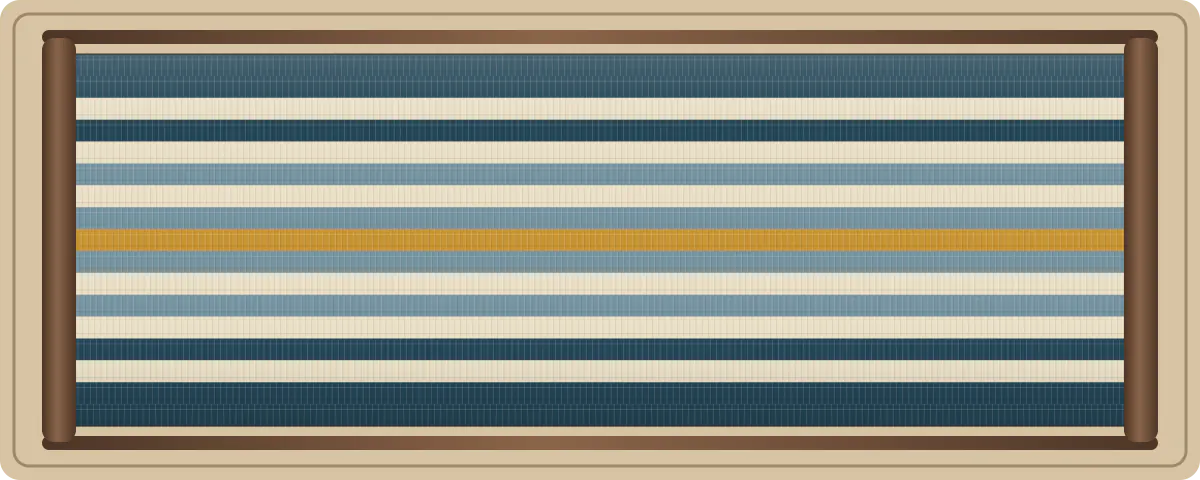
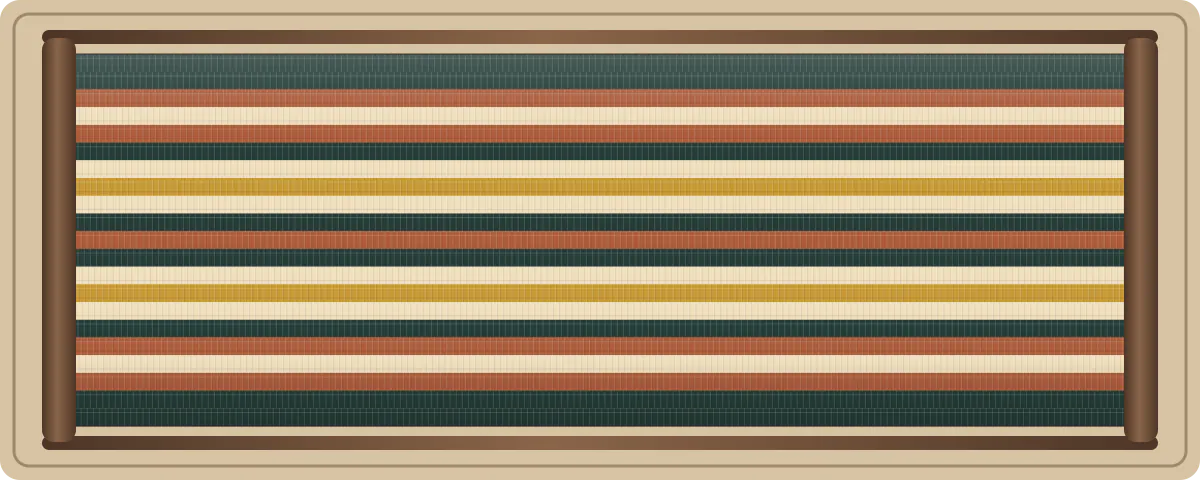
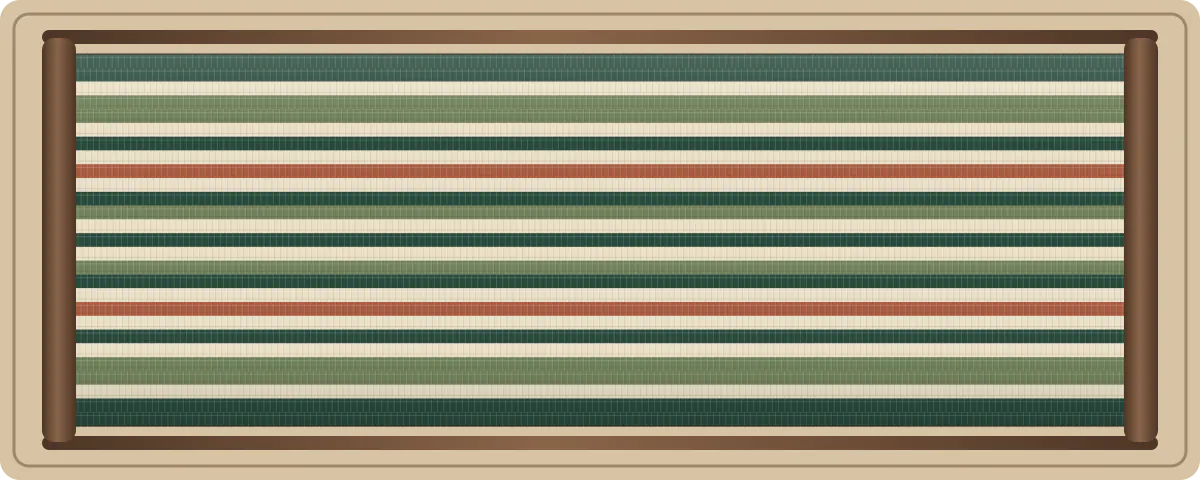
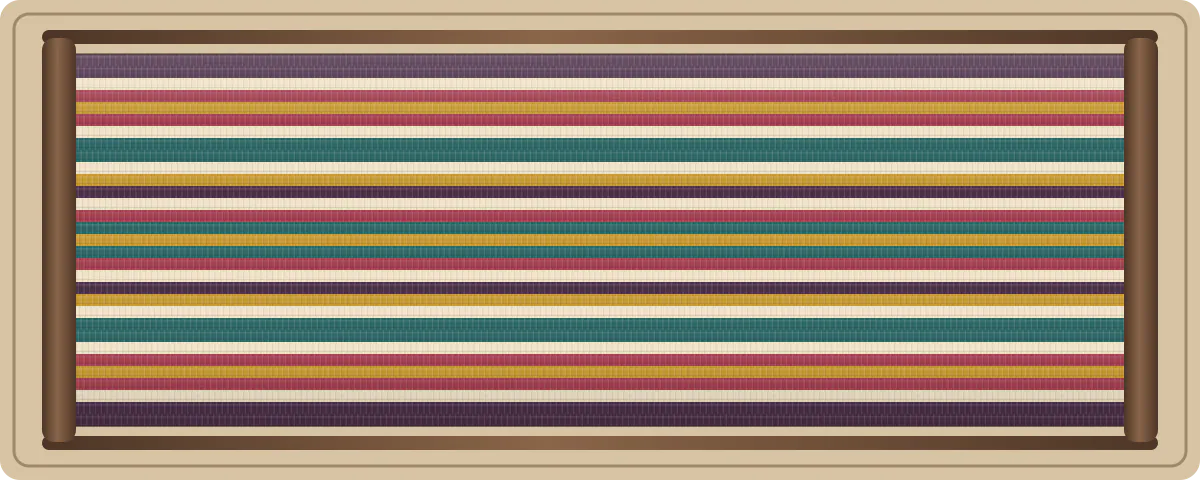
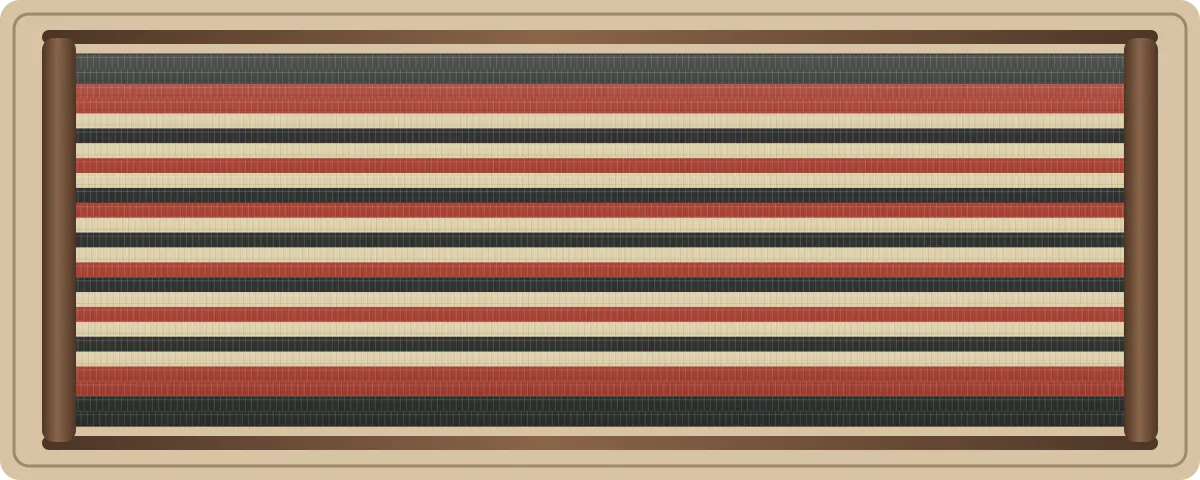
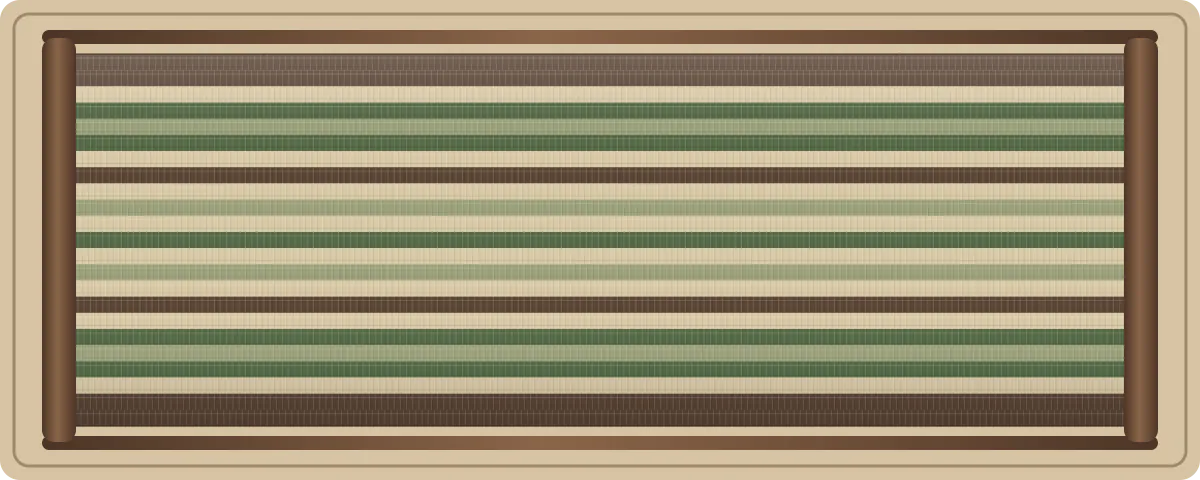
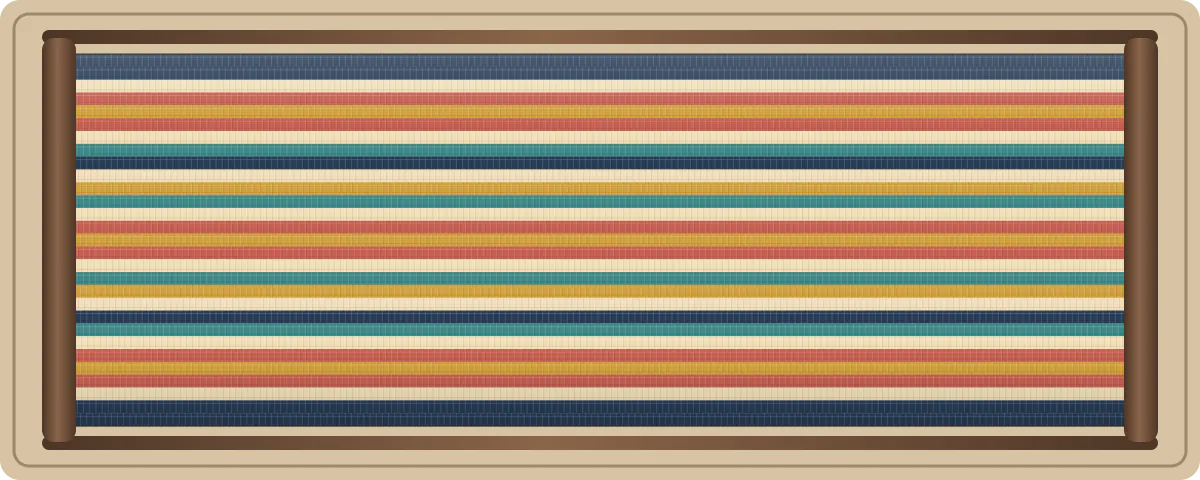
Choose a plain-weave color order or a Baltic pickup starter. Open it in the homepage generator to edit the draft and download a loom-side sheet.
Plain weave uses a numbered heddled/open (H/U) warp order and alternating sheds. Baltic pickup adds pattern-thread choices for each row; use its pick/drop chart rather than treating the motif as a stripe sequence.
Want to design from a blank draft? Start with the generator, then return here when you want an editable starter.
Prefer a ready-to-print sheet? Download the free 2-page starter PDF with Quiet Harbor plain weave plus Bordered Pickup Key Fob on Letter paper, no account needed (See what is included). Use the worksheet as-is, or open a starter in the generator to edit colors and print your own sheet.
Pattern finder
Find an inkle band pattern by project
Loom-side copies
Printable PDF patterns
Plain-weave starter sheets
Each starter opens a numbered H/U warp order with color sequence, thread count, color totals, Download PDF and Print ready in the generator.
This is not a plain stripe draft. It opens the pickup starter with 7 pattern threads, 2 side borders, 8 background gaps and a row-by-row pick/drop sheet.
Pattern threads, background threads and side borders, plus a row-by-row pick/drop chart. Start with a small sample before using a band as a load-bearing strap.
Baltic pickup starter · 31 ends · first pickup
First Pickup Guitar Strap Sampler
A strap-scale starter with 9 pattern threads, 3 border threads each side and a small vertical diamond repeat.
31 ends = 9 pattern + 16 background + 3 border on each side. Output: an editable 8-row motif and a row-by-row pick/drop sheet.
Use for strap, guitar-style strap or pickup sample.
Pick a 17–21 thread design with a strong border. Fewer color changes make the H/U order easier to check.
02
For a wider band
Try 27–31 threads when the visual scale suits a strap or trim. Actual width still depends on the yarn and sett.
03
At the loom
Use the generated numbered draft and tracker, then print or save the starter as a PDF warp sheet. Sample before an important project because the preview is a color-order plan, not a fabric simulation.
Pattern fit
Which inkle band pattern should you open first?
Use the smaller starters for a bookmark, key fob or first sample; use wider starters for trim or straps. Choose plain weave for a color-order draft with numbered H/U threading. Choose Baltic pickup for a motif chart with row-by-row pattern-thread instructions. End count is a planning guide, not a finished width in centimetres.
What these patterns show
Warp order, not a promise of exact fabric
Plain-weave starters use the editor's 9–99-thread color-order model. Pickup starters have separate pattern-thread, border and background counts and a motif grid. Neither preview establishes finished width or verifies a woven sample. Yarn thickness, sett, tension, beat and finishing change the result; weave a sample when size or motif placement matters.
Starter walkthrough
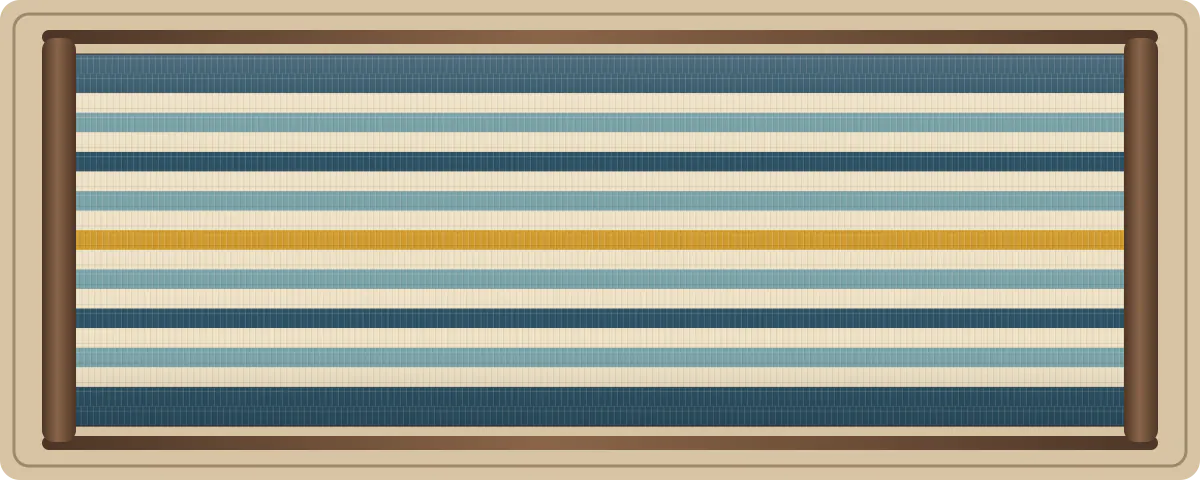
Quiet Harbor: a 17-end plain-weave starter
A symmetrical navy, cream and blue warp with one gold center end. The maker has supplied a woven sample photo and the yarn record below. Follow the numbered warp sheet to reproduce the color order.
Maker-provided photograph of a real Quiet Harbor woven sample. The maker reports using the 17-end draft and yarn setup below.
Yarn used for this sample
Photo and yarn details supplied by the maker. Finished width, density and strength have not been independently measured; your yarn, tension and beat will affect the result.
Fiber
100% combed cotton, dyed plied yarn
Warp
8/4 cotton (Ne 8 singles, 4 plies; about 295 tex)
Weft
Navy 8/2 cotton (Ne 8 singles, 2 plies; about 148 tex)
Warp colors
6 navy · 6 cream · 4 light blue · 1 gold
Threading
17 ends: 9 H (heddled), 8 U (open). Odd-numbered ends H; even-numbered ends U.
Structure
Warp-faced plain weave. Alternate sheds and adjust weft tension to keep the band even; sample to find the width and beat for your yarn.
Use the same order with substitute colors if needed and record the changes. A documented sample should retain this draft, actual yarn details and a photograph of the result.
Sample gallery
Woven sample photos
Maker-provided photographs document a Quiet Harbor plain-weave sample and a Bordered Pickup Key Fob sample. Both have a linked starter and maker-reported yarn record; choose the matching technique when planning your own band.
Quiet Harbor · plain weave
Maker-provided photograph and yarn record for the 17-end starter.
H = heddled; U = open. P1–P5 are pattern-thread numbers at warp ends 3, 6, 9, 12 and 15. Each listed end is one plied yarn, not a doubled pair. Total: 9 H / 8 U.
Cream · H
Cream · U
Navy P1 · H
Cream · U
Cream · H
Navy P2 · U
Cream · H
Cream · U
Navy P3 · H
Cream · U
Cream · H
Navy P4 · U
Cream · H
Cream · U
Navy P5 · H
Cream · U
Cream · H
Work rows 1–6 in order and repeat. Each row is one weft pass. Background and border ends follow the natural shed; adjust only the pattern ends listed below.
Actual adjustments for this sampling setup
Row / upper shed
Lift from below
Lower from above
1 · H
None
P3
2 · U
P1, P5
None
3 · H
P2, P4
P1, P5
4 · U
P3
P2, P4
5 · H
P2, P4
P1, P5
6 · U
P1, P5
None
Alternate the natural shed: H upper for odd rows, U upper for even rows. Pattern ends already in the required layer stay there. Weave a short plain-weave header and finish before removing the sample from the loom.
Download the free 2-page Letter teaching worksheet covering both documented 17-end starters: Quiet Harbor (warp-faced plain weave) and Bordered Pickup Key Fob (Baltic pickup). Includes full maker-reported yarn details, numbered 17-end warp orders with H/U threading, shed-aware pickup table, and blank note fields for recording your own sample measurements.